
Research and Development
- Research Cell
- Research and Consultancy Policy
- PhD Research Centers
- Sponsored Research Projects
- Research Awards and Recognitions
- Patents
- Research Laboratories
- Research Publications
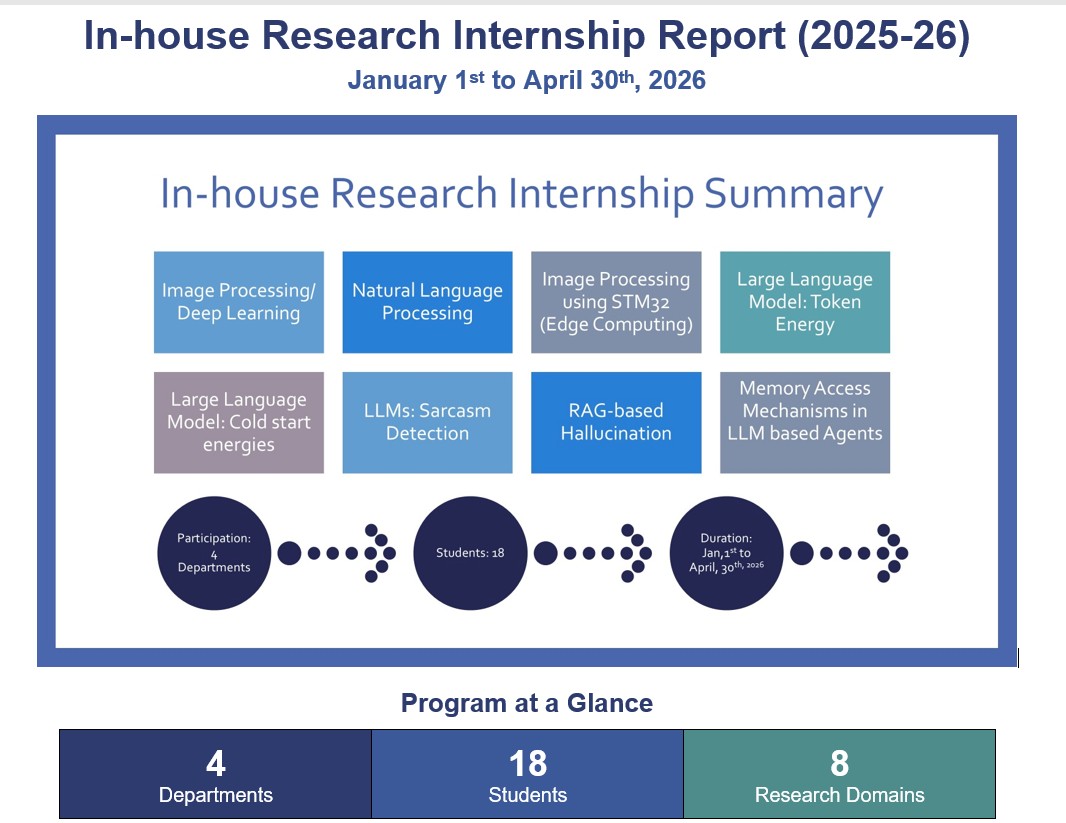
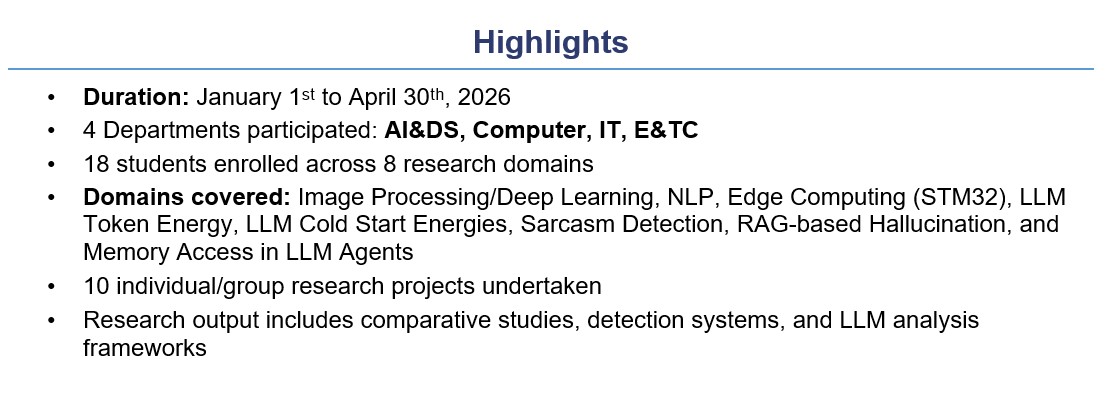
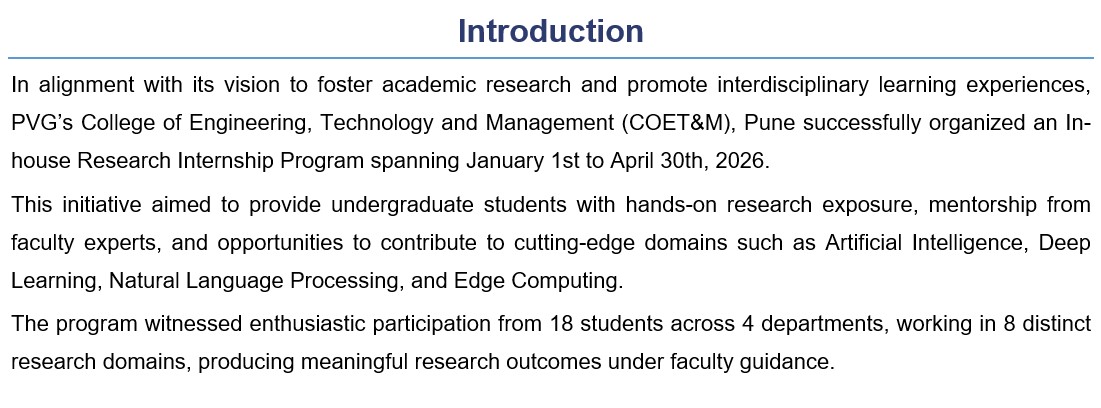
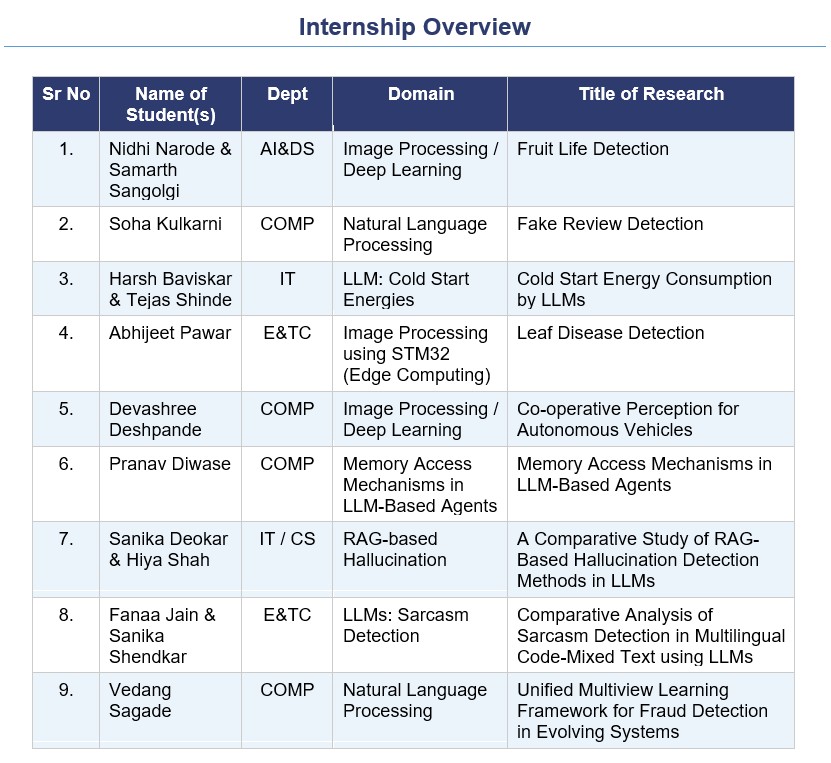
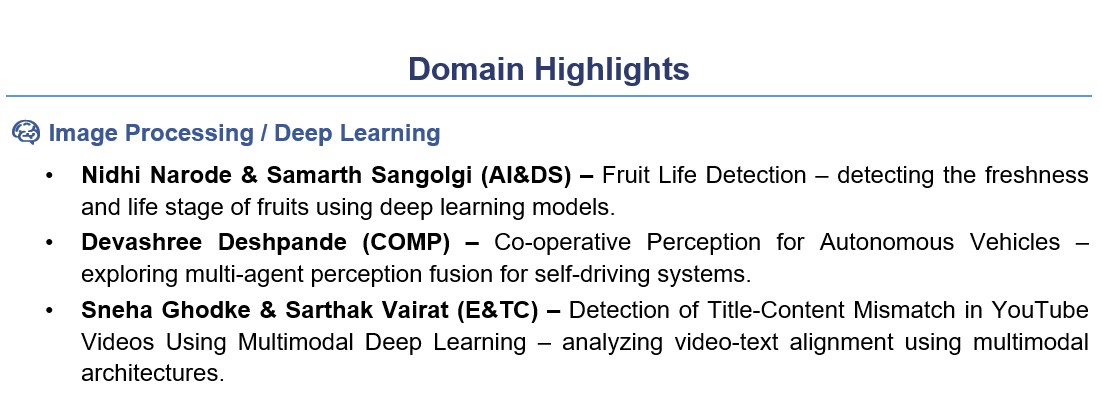
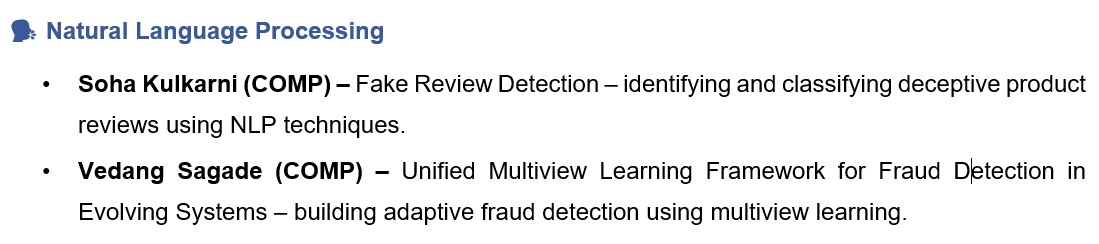
- Inhouse Internship
- International Research Internship
- MoU
Dean Research and Development:
Dr Mrs Minakshi Atre, Artificial Intelligence and Data Science DepartmentResearch Co-ordinators:
| Name of the Department | Research-Coordinator | Domain Expertise |
| Department of Mechanical Engineering | Dr Ami Barot | Vibration Analysis, Condition Monitoring, Signal Processing, AIML |
| Department of Electrical Engineering | Dr Mangesh Thakare | Energy Science & Engineering, Operational Strategies of EVs, Grid-connected and Isolated Renewable Energy systems |
| Department of Printing Engineering | Dr Varsha Chaware | Printed Electronics, Electronic Packaging, Electronic Materials Development |
| Department of Electronics and Telecommunication Engineering | Prof Tanuja Khatavkar | Optical Communication, Education Technology |
| Department of Computer Engineering | Dr Seema Patil | AIML and Predictive Analytics |
| Department of Information Technology | Prof Satish Kamble | Data Mining, Machine Learning, Natural Language Processing, IoT |
| Department of Artificial Intelligence and Data Science | Dr Ravindra Apare | Image Processing, Information Security, Human-Computer Interaction |
| Department of MBA | Dr Kalpna Lodha | Human Resource Management |
PhD Research Centers
There are PhD Research Center at following Departments- Department of Electrical Engineering
- Department of Mechanical Engineering
- Department of Printing Engineering
PhD Guidance at other research centers
List of PhD faculty(other than PhD guides) with specializationDepartment-wise details of sponsored research
The faculty members of PVG’s COET, Pune has bagged research awards from various recognized organizations. The details are as follows
ASME Student Mechanism and Robot Design Competition
Title of Project: Stair Climbing Platform driven by Conjugate Wheels
Award:ASME Student Mechanism and Robot Design Competition
Graduate Category, Mechanisms Division, Third Place Award
Level (State/national/International): International
Frequency of Award: Yearly
Organization: American Society of Mechanical Engineers
Date of Award: August 2014
Awardee/s: Girish Sudhir Modak and Dr. Manmohan M. Bhoomkar AVCOE Research Center and Staff at PVG’s COET, Pune. Abstract with photo/video:
The average human age is increased and a common problem that the elderly people are facing is ‘impaired mobility’. New policies continue to make newly built areas accessible to disabled, but old buildings can’t be re-developed because they are without elevators. So ‘Staircase Climbing Wheelchair’ is a need of day. Many designs are already converted into the actual products but they are not cost effective or affordable. This project proposes a new and most importantly ‘Affordable’ design of a stair-climbing capable mechanism for the wheelchairs for elderly or disabled. Stair Lift is one more application in which this configuration can be adopted to avoid Back-Slip
Award:ASME Student Mechanism and Robot Design Competition
Graduate Category, Mechanisms Division, Third Place Award
Level (State/national/International): International
Frequency of Award: Yearly
Organization: American Society of Mechanical Engineers
Date of Award: August 2014
Awardee/s: Girish Sudhir Modak and Dr. Manmohan M. Bhoomkar AVCOE Research Center and Staff at PVG’s COET, Pune. Abstract with photo/video:
The average human age is increased and a common problem that the elderly people are facing is ‘impaired mobility’. New policies continue to make newly built areas accessible to disabled, but old buildings can’t be re-developed because they are without elevators. So ‘Staircase Climbing Wheelchair’ is a need of day. Many designs are already converted into the actual products but they are not cost effective or affordable. This project proposes a new and most importantly ‘Affordable’ design of a stair-climbing capable mechanism for the wheelchairs for elderly or disabled. Stair Lift is one more application in which this configuration can be adopted to avoid Back-Slip
AVISHKAR (Maharashtra State Inter-University Research Convention) Teachers Category, Engineering and Technology Section
Title of Project: Staircase Climbing Platform driven by Conjugate Wheels
Award: AVISHKAR (Maharashtra State Inter-University Research Convention)
Teachers Category, Engg and Technology Section, Second Rank Award
Level (State/national/International): State
Frequency of Award: Yearly
Organization: Government of Maharashtra
Date of Award:23 January 2015
Awardee/s: Girish Sudhir Modak and Dr. Manmohan M. Bhoomkar
Staff at PVG’s COET, Pune
Abstract with photo/video:
Many old buildings in the densely populated areas of society are without elevators. The task of climbing stairs is a major challenge for physically handicapped people or for elderly people due to the age dependent ‘impaired mobility’. To transfer material from ground floor to upper levels is another challenge for even a normal bodied person living in old and high buildings without elevators. So ‘Staircase Climbing Platform’ is a need of the day, at least in the developing countries. The platform is to serve the purpose of chassis. Depending upon the body that is built on it, the different versions like ‘Staircase Climbing Wheel-chair’ or ‘Staircase Climbing Trolley for transfer of material’ can be derived. They are also useful in the buildings with lifts, in case of unavailability of power backup. The designs which are already developed in this regard are not cost effective. This proposal is a new, innovative, simple but ‘affordable’ design of stair-climbing platform and is a complete new application of the ‘Gear Generation’ principle. It uses wheels with their profile similar to a ‘Pinion Gear’, perfectly conjugate to the staircase profile, treating it as a ‘Rack’. Due to the elimination of complicated parts and transmission elements, it is easily adaptable to develop low cost platform with stair climbing ability.
Award: AVISHKAR (Maharashtra State Inter-University Research Convention)
Teachers Category, Engg and Technology Section, Second Rank Award
Level (State/national/International): State
Frequency of Award: Yearly
Organization: Government of Maharashtra
Date of Award:23 January 2015
Awardee/s: Girish Sudhir Modak and Dr. Manmohan M. Bhoomkar
Staff at PVG’s COET, Pune
Abstract with photo/video:
Many old buildings in the densely populated areas of society are without elevators. The task of climbing stairs is a major challenge for physically handicapped people or for elderly people due to the age dependent ‘impaired mobility’. To transfer material from ground floor to upper levels is another challenge for even a normal bodied person living in old and high buildings without elevators. So ‘Staircase Climbing Platform’ is a need of the day, at least in the developing countries. The platform is to serve the purpose of chassis. Depending upon the body that is built on it, the different versions like ‘Staircase Climbing Wheel-chair’ or ‘Staircase Climbing Trolley for transfer of material’ can be derived. They are also useful in the buildings with lifts, in case of unavailability of power backup. The designs which are already developed in this regard are not cost effective. This proposal is a new, innovative, simple but ‘affordable’ design of stair-climbing platform and is a complete new application of the ‘Gear Generation’ principle. It uses wheels with their profile similar to a ‘Pinion Gear’, perfectly conjugate to the staircase profile, treating it as a ‘Rack’. Due to the elimination of complicated parts and transmission elements, it is easily adaptable to develop low cost platform with stair climbing ability.
Maharashtra State Inter University Research Competition ‘Avishkar-2011-2012’
Title of Project : Development of Artificial Tool for Assessing Volatile Price of Electric Power under Deregulated Environment
Award : First Prize under Ph.D Category at Maharashtra State Inter University Research Competition ‘Avishkar-2011-2012’,held during 13th -15th Jan 2012 at Shivaji University, Kolhapur, organized by Association of Indian Universities (AIU) and represented Pune University.
Level : National
Frequency of Award : Yearly
Organization: Association of Indian University (AIU)
Date of Award : 15th January 2012
Awardee : Mrs Surekha R Deshmukh
Abstract
For every state utility in India, along with state owned generation there are two major sources of power available to fulfill the load demand. They are, Central Govt owned generation i.e. central sector generation and power purchased from power trading market.
For optimum scheduling additional sources of power need to be incorporated in the generation scheduling algorithm, along with their individual cost functions.
In India, power available from central sector generators is charged through frequency dependant tariff called Availability Based Tariff (ABT) and power available at market is charged with Market Clearing Price (MCP). In the present work, the feasibility of incorporating power available at market as ‘market generation’ while preparing a day ahead schedule is established. The incorporation of frequency dependant central sector generation as ‘grid generator’ is reported. Thus, optimum scheduling problem becomes distributing load amongst internal generators, central sector generator and power market, with appropriate cost functions to minimize cost of generation.
The objective of work is to develop suitable Artificial Intelligent Tool to ascertain the randomly varying parameters such as frequency, price of power and integrate them for generation scheduling task to derive commercial as well as technical benefits.
Award : First Prize under Ph.D Category at Maharashtra State Inter University Research Competition ‘Avishkar-2011-2012’,held during 13th -15th Jan 2012 at Shivaji University, Kolhapur, organized by Association of Indian Universities (AIU) and represented Pune University.
Level : National
Frequency of Award : Yearly
Organization: Association of Indian University (AIU)
Date of Award : 15th January 2012
Awardee : Mrs Surekha R Deshmukh
Abstract
For every state utility in India, along with state owned generation there are two major sources of power available to fulfill the load demand. They are, Central Govt owned generation i.e. central sector generation and power purchased from power trading market.
For optimum scheduling additional sources of power need to be incorporated in the generation scheduling algorithm, along with their individual cost functions.
In India, power available from central sector generators is charged through frequency dependant tariff called Availability Based Tariff (ABT) and power available at market is charged with Market Clearing Price (MCP). In the present work, the feasibility of incorporating power available at market as ‘market generation’ while preparing a day ahead schedule is established. The incorporation of frequency dependant central sector generation as ‘grid generator’ is reported. Thus, optimum scheduling problem becomes distributing load amongst internal generators, central sector generator and power market, with appropriate cost functions to minimize cost of generation.
The objective of work is to develop suitable Artificial Intelligent Tool to ascertain the randomly varying parameters such as frequency, price of power and integrate them for generation scheduling task to derive commercial as well as technical benefits.
State level Competition of Industrial and Research Projects for Faculty Members, Dipex 2013
Title of Project: Development of Artificial Intelligence Tool for Assessing the Volatile Wind Power under Restructured Indian Power Sector
Award: First rank in State level Competition of Industrial and Research Projects for Faculty Members, Dipex 2013, during 6-13 March 2013, Pune, participated under Ph.D category. The prize includes Rs. 50,000/- and certificate.
Level: State
Frequency of Award: Yearly
Date of Award: 13th March 2013
Awardee : Mrs Surekha R Deshmukh
Abstract
Developments in the last two decades in power system introduced many technological and conceptual changes in the Power Sector. The power is available from conventional generation, purchasing or selling power from or to the market, buying power from other utilities (mainly Central Sector Plants in India) and from renewable energy sources such as wind. But the availability of renewable generation and the price of power available from central sector plants and power trading market are not certain and change randomly from time to time. Anticipating and incorporating the uncertainties in the generation and price of power from alternative sources of power, pose a challenge in the day ahead activity. The present work addresses this issue. Day ahead Wind Power Estimation: The available generation from conventional energy sources using stored resources or stored water is quite controlled, predictable and almost constant in nature. However the non-conventional enaergy sources are intermittent in nature due to uncertainty in the fuel availability. The uncertainty associated with wind speed and hence in wind power generation needs to be analyzed. ANN is developed to predict wind speed and wind power using typical representative data of Wind Park installed by SUZLON Energy Group as a case study. The applicability of ANN for predicting wind power generation is revalidated.
Award: First rank in State level Competition of Industrial and Research Projects for Faculty Members, Dipex 2013, during 6-13 March 2013, Pune, participated under Ph.D category. The prize includes Rs. 50,000/- and certificate.
Level: State
Frequency of Award: Yearly
Date of Award: 13th March 2013
Awardee : Mrs Surekha R Deshmukh
Abstract
Developments in the last two decades in power system introduced many technological and conceptual changes in the Power Sector. The power is available from conventional generation, purchasing or selling power from or to the market, buying power from other utilities (mainly Central Sector Plants in India) and from renewable energy sources such as wind. But the availability of renewable generation and the price of power available from central sector plants and power trading market are not certain and change randomly from time to time. Anticipating and incorporating the uncertainties in the generation and price of power from alternative sources of power, pose a challenge in the day ahead activity. The present work addresses this issue. Day ahead Wind Power Estimation: The available generation from conventional energy sources using stored resources or stored water is quite controlled, predictable and almost constant in nature. However the non-conventional enaergy sources are intermittent in nature due to uncertainty in the fuel availability. The uncertainty associated with wind speed and hence in wind power generation needs to be analyzed. ANN is developed to predict wind speed and wind power using typical representative data of Wind Park installed by SUZLON Energy Group as a case study. The applicability of ANN for predicting wind power generation is revalidated.
IOSRD Research Award 2019 – Best Researcher Award

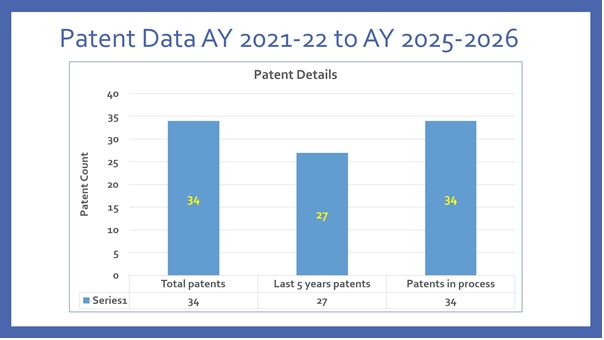
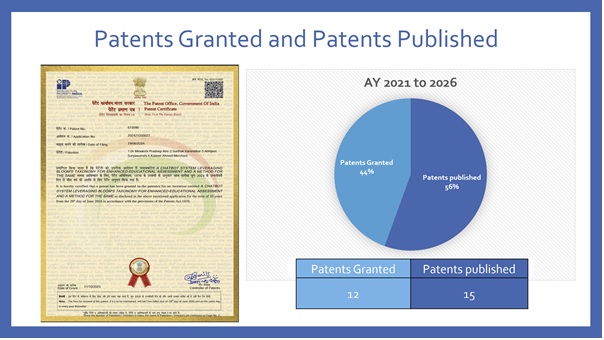
Patents
Patents Statistics
Details of Research Softwares
Research Softwares
- MATLAB Campuswide with toolboxes
- ETAP software along with different modules (Single and Multi user)
- MiPOWER
- PSCAD
- PLC Programming Software – Micrologix 1400
- SCADA Programming Software – Factory Talk View Studio for machine edition.
- Ansys EM (Perpetual License)
- Hardware in Loop (HIL) DSpace 1104
- VLSI -Vivado Tool
- Proteus VSM
- Orcad PCB Design
- MultiSim
- Microwind Layout & Simulation Tool
- Labview (National Instruments)
- Kuka.sim (15 Users):Robot Simulation & Programming
- DrillBit SoftTech India Private Ltd
PVG’s COET & GKPIoM, Pune has state of the art multidisciplinary research laboratories. The details are as follows.
Product Innovation Laboratory (in collaboration with Dassault Systems)
Faculty:
Developed:
A project titled “Build and Control of Bionic arm using EMG signal”Product Innovation Lab is developed in PI lab. The project is sponsored by LA Foundation, Dassault Systemes.
The major goal of the project is to provide the society with low cost, light weight Bionic arm for the amputees. This bionic arm is controlled by the EMG signals taken from the amputees. The main research is concentrated around increasing the Degree of Freedom of the bionic arm and improving its functionality. The EMG signal is extracted from the human body, transforms are applied to it and features are extracted from the data. Further by applying classification and various Machine Learning algorithms, the learning model is built. Most of the prosthetic arms designed and used in India are very costly yet they fail to provide the high Degree of Freedom (DOF). Due to less DOF, the movements of the arm are restricted to only a few actions like gripping. Design of bionic arm completed herein consists of more Degree of Freedom and yet it is cost effective. Using 3 D printing, a light weight bionic arm is fabricated as shown below.

- Prof. V. S. Chavan, Lab In-Charge (Department of Mechanical Engg.)
 |
Embedded Robotics Laboratory
Faculty Team :
- Vrunda Joshi (Electrical Department)
- Vaishali Gongane (E/TC Department)
- Radha Ranjekar (Electrical Department)
- Manish Nagoshe (Mechanical Department)
 |
Fire Bird V ATMEGA2560 Robotic Research Platform As a Universal Robotic Research Platform, Fire Bird V ATMEGA2560 provides an excellent environment for experimentation, algorithm development. |
 |
Spark –V Robot Based on ATMEL ATMEGA16A Xbee wireless modules 3 MaxBotix EZ series ultrasonic range sensors Sensors: Three white line sensors Three IR proximity sensors Three directional light intensity sensors 2 Position encoders with 12.97mm resolution MaxBotix EZ series ultrasonic range sensors servo mounted Ultrasonic Range Sensor |
 |
4 Axis Robotic Arm Designed for small mobile robots for object manipulation. It can grip objects up to 60mm wide with the griping force of 250gms. Arm has reach of 29cm. |
 |
Autonomous Car Setup 10:1 scaled down Car model with D.C. motor drives developed for Auto-navigation and Auto-parking algorithms. The model has Raspberry Pi-3 as a core processor with allied sensors for navigation and obstacle detection. |
Gravure Printing and Ink Testing Laboratory
Faculty :
- Dr.Varsha A.Chaware
 |
Rotogravure Machine A 4-color gravure machine for the conduction of experimental runs on absorbent and non-absorbent substrates for research. |
 |
Electrostatic Assist Enulec ESA system is designed to optimize the transfer of ink from the gravure cylinder to the printing substrate by creating an electric field in the area of the nip to assist the capillary action of the gravure process. |
 |
Mottle Tester SFDA algorithm is used to calculate solid and halftone mottle in a printed image. Also topography, roughness and formation index is measured. |
 |
Missing Dot Analyzer Fibro software is used to measure the missing dots in a printed image. |
 |
Image Analyzer Dexel Image Analyzer is used to measure the dot count, dot circularity and voids in a printed image. |
 |
Contact Angle Meter A Homarc Contact Angle Meter is used to measure the contact angle of test liquids and inks on substrate and further calculate the substrate energy of the substrate. |
 |
Surface Tensiometer Kyowa DY300 surface tensiometer is used to measure surface tension of solvent, medium and ink by platinum du Nouy ring or Wilhelmy plate method. |
 |
Viscometer Brookfield viscometer is used to study the rheological behavior of ink. |
 |
Glossmeter Rhopoint tri-glossmeter is used to measure the print gloss at 200, 600 and 800 on printed samples. |
 |
Spectrophotometer/ Spectro-densitometer Gretag Spectrophotometer and Spectro-densitometer is used to generate profile and measure color and density functions on printed samples. |
Internal Combustion Engines Laboratory
Faculty Team :
- J. S. Kulkarni (Mechanical Department)
- Vishal S. Chavan (Mechanical Department)
- S. D. Shingate (Mechanical Department)
- S. V. Amble (Mechanical Department)
 |
Computerized Test Setup for 3 - Cylinder Petrol Engine Computerized Test setup for 3 - Cylinder Petrol Engine provides user friendly computer interface to Tech Scholar for study of various engine parameters and graphs. |
 |
Computerized Test Setup for VCR Diesel Engine Computerized Test setup for VCR Single cylinder diesel engine provides< user friendly computer< interface to Tech Scholar for study of various< engine parameters and graphs. |
Kattakkar Research Laboratory in Electrical Engineering
Kattakkar Post Graduate Research Laboratory in Electrical Engineering
Laboratory Equipment : |
C2000 F 28027 Launch Pad Piccola Evauation Kit With Code Composer Studio Version 6 |
 |
DRV 8301 : 24V, 10A, three-phase MOSFET-based H-bridge inverter along with shunt resistances (one in each phase) used for current measurement |
 |
Permanent Magnet Synchronous Motor (30V, 40 W ) coupled with PMDC Machine |
 |
DSP TMS 320F2812 with Code Composer Studio V3.1 |
 |
Digital Motor Control Card DMC 550 of Texas Instruments |
 |
Prototype 6-4-2 pole combination reluctance rotor brushless doubly fed reluctance machine with single winding stator |
 |
Prototype 8-6-4 pole combination circular ducted rotor brushless doubly fed reluctance machine with dual winding stator |
 |
Ratings of Inverter : 3-phase, 3-level, 5KVA, 415V, 20A IGBT Modules with antiparallel diodes :1200V, 32A Clamping Diodes :1200V, 32A D. C. Link capacitors :2200 µF, 450V Driver modules: 5V to 15V D.C. Power measurement meter : Rishabh make RS485 TO RS232 Converter A.C. Current Sensing using C. T. sensor. |
- MATLAB and Toolboxes
- ETAP
- Mi-Power
Dynamics of Machinery Lab
Research Facilities in Dynamics of Machinery Lab
Faculty Team :- Dr. P. G. Kulkarni (Department of Mechanical Engg.)
- Prof. Mrs. Ami Barot (Department of Mechanical Engg.)
- To facilitate research in the field of vibration and noise
- To provide vibration and noise measurement facilities
- To prepare students and staff with necessary knowledge in the domain of vibration based condition monitoring
- To learn vibration and noise measurements
- To analyse natural frequencies and mode shapes


Texas Instruments’ Centerof Excellence
Objectives :
Features
Embedded applications using 32-bit TIVA series platforms
Co-ordinators
- To Inculcate and learn application/project oriented approach
- Understand system approach for building applications around TI technologies.
- Empower students with necessary knowledge, skills and expose them to TI technologies and thereby bridging the gap between industry and academia.
- Embedded C programming techniques for 32-bit platform
- Embedded protocols and its interfacing techniques
- Embedded Wireless networking concepts and its implementation with application oriented projects and case studies.
 |
Tiva ‘C’ Series LaunchPad Evaluation Kit TM4C123G |
 |
MSP430- eZ430-RF2500 Development Tool |
 |
C2000 F 28027 Launch Pad Piccola Evauation Kit |
 |
CC110L for MSP 430 Air module Booster |
 |
Capacitive Touch Booster Pack for 430 |
 |
MSP430-F5529 Lauchpad Evaluation Kit |
- USB 2.0-enabled MSP430F5529 16-bit MCU up to 25 MHz
- 128KB Flash and 8KB RAM
- 12 Bit SAR ADC
- Various USB device class examples and embedded software libraries available (CDC, HID, MSC)
- eZ-FET lite: Open source onboard debugger with application UART
- One USB connection for emulator and target via the use of an onboard USB hub
- USB as power source: 5V and 3.3V through a high efficiency DC/DC converter
- 40 pin LaunchPad standard leveraging the BoosterPack ecosystem
|
Analog System Lab Kit PRO |
 |
TI spins motors Drive Evaluation Kit |
|
|
- Kalyani Kulkarni kjk_entc@pvgcoet.ac.in (E&TC Department)
- V. A. Joshi(Electrical Department)
- Vaidehi Sovani(E&TC Department) vaidehi_sohoni@gmail.com
- Vaishali Gongane (E&TC Department)
- S. G. Shimpukade
- R. M. Rathod
Communication Laboratory
Objectives
- To facilitate research in communication domain
- To provide simulation, test and measurement facilities
- To motivate and prepare students and staff with necessary knowledge, skills in various domains of communication
- To learn measurements using equipments such as vector network analyser, spectrum analyser etc.
- To design various communication systems or circuits such as antenna, filters, transmitter, receiver, directional coupleretc
- To simulate and test the designed communication circuits.
| Equipments /Simulation tool / others | Specifications | Manufacturer |
| Vector Network cum Spectum Analyzer | 30 KHz to 4GHz | Keysight |
| Spectrum Analyzer | 9KHz-3 GHz | G.W.Instek |
| Spectrum Analyzer | 9 KHz-1.8 GHz | Hewlett Packard |
| R. F. Generator | Upto 1 GHz | Hewlett Packard |
| Arbitary Waveform Generator | Upto 10 MHz | G.W.Instek |
| LCR Q Meter | Upto 100 KHz | G.W.Instek |
| Microwave Test Bench | X band (8 to 12 GHz ) | Seico |
| Microwave Power Meter | 10 MHz-20 GHz | AMITECH |
| Antenna Trainer (ATS10) with Auto-rotational System | 86 - 860 MHz (Variable) | AMITECH |
| Antenna Trainer (MAT10 with HORN and DISH ANTENNA) with Auto-rotational System | 10 GHz (Fixed) | AMITECH |
| D.S.O. | 100 MHz | Tektronics |
| Multiple Regulated Power Supplies | 5V (fixed), 30 V (variable) and +/- 15 V (Variable) | Scientech |
| Multisim 7 | ciruit Simulation tool | National Instruments |
| Ultiboard 7 | PCB design tool | National Instruments |
| Matlab 7 | Ciruit Simulation tool | MathWorks |
| Subsrciption of IEEE Digital Library | Transaction/Magazine/Letters | IEEE |
MATLAB Laboratory
MATLAB License Details
User Details
50 Toolbox list
| License type | Version | Toolboxes count | Purchasing Cost |
| Campus wide | MATLAB 2018b Current: MATLAB 2020a | 50 | Rs. 6,66,700/- |
| Sr. No | License Type | User Count |
| 1. | Individual | 233 |
| 2. | Campus | 80 systems |
| 3. | Concurrent | 40 systems |
| Sr. No | Toolbox | Version | Sr. No | Toolbox | Version | |
| 1. | MATLAB (Basic ) | 9.5 | 26. | MATLAB Compiler | 7.0 | |
| 2. | Simulink | 9.2 | 27. | MATLAB Coder | 4.1 | |
| 3. | 5G | 1.0 | 28. | LTE | 3.0 | |
| 4. | Antenna | 3.2 | 29. | Instrument Control | 3.14 | |
| 5. | Audio System | 1.5 | 30. | Model Predictive Control | 6.2 | |
| 6. | Bioinformatics | 4.1 | 31. | Partial Differential Equation | 3.1 | |
| 7. | Communications | 7.0 | 32. | HDL Coder | 3.13 | |
| 8. | Computer Vision System | 8.2 | 33. | HDL Verifier | 5.5 | |
| 9. | Control System | 10.5 | 34. | Image Acquisition | 5.5 | |
| 10. | Curve Fitting | 3.5.8 | 35. | Image Processing | 10.3 | |
| 11. | DSP System | 9.7 | 36. | Optimization | 8.2 | |
| 12. | Data Acquisition | 3.14 | 37. | Parallel Computing | 6.13 | |
| 13. | Deep Learning | 12.0 | 38. | MATLAB Report Generator | 5.5 | |
| 14. | Embedded Coder | 7.1 | 39. | Phased Array System | 4.0 | |
| 15. | Fixed-Point Designer | 6.2 | 40. | Power train Block set | 1.4 | |
| 16. | Fuzzy Logic | 2.4 | 41. | RF | 3.5 | |
| 17. | Global Optimization | 4.0 | 42. | Robotics System | 2.1 | |
| 18. | Simulink Coder | 9.0 | 43. | Robust Control | 6.5 | |
| 19. | Simulink Control Design | 5.2 | 44. | Sensor Fusion and Tracking | 1.0 | |
| 20. | Simulink Design Optimization | 3.5 | 45. | Simscape Multibody | 6.0 | |
| 21. | Simulink Report Generator | 5.5 | 46. | Simscape Electrical | 7.0 | |
| 22. | Spreadsheet Link | 3.4 | 47. | Simscape | 4.5 | |
| 23. | Stateflow | 9.2 | 48. | Signal Processing | 8.1 | |
| 24. | Statistics and Machine Learning | 11.4 | 49. | Vision HDL | 1.7 | |
| 25. | Symbolic Math | 8.2 | 50. | Wavelet | 5.1 | |
AUGMENTED AND VIRTUAL REALITY LAB
VR is a fully computer generated environment that gives you an immersive experience of being there. AR layers digital information onto the real world in real time through the use of a camera-equipped device like a mobile phone in order to augment or enhance reality.
Faculty Team:
The research area of the Augmented and Virtual Reality Lab
- Dr. S.A. Mahajan HOD, Information Technology Department
- Prof.M.R. Mahajan Faculty Coordinator Information Technology Department
- To study modern overviews on virtual reality and list the applications of VR.
- To know the representation of Virtual world in VR.
- To Study the fundamentals of visual perception, motion and tracking in real and virtual world.
- To study modern overviews and perspectives on Augmented reality and list the applications of AR
- To study the working of various state of the art AR devices.
- To study computer vision concepts for AR and describe AR techniques.
 |
Meta Oculus Quest 3 Advanced All-in-One ❖ 128 GB Storage ❖ 6 GB RAM ❖ 3640mAh rechargeable lithium ion battery pack with a 14 watt-hour rating ❖ It is a single cell battery with a nominal voltage of 3.85 volts and it weighs approximatively 63 grams. ❖ Oculus Quest virtual reality headsets are based on Android OS. |
 |
VR Head Set ❖ The DOMO nHance VRF3 is a VR headset that's been cleverly designed to accept any smartphone which has upto 6" LCD. ❖ This VR device provides virtual reality for the wearer. ❖ The goal of the VR headset is too providing immersive virtual reality experience. |
 |
5V Dual-Channel Relay Module The dual-channel relay module contains switching relays and the associated drive circuitry to make it easy to integrate relays into a project powered by a microcontroller. the relay coil is rated for 5VDC, and the contacts are rated for 10A at 250VAC or 30VDC, or 125VAC or 28VDC.The freewheeling diodes prevent voltage spikes across the switching transistors. The status LEDs turn on when the relay is active and indicate switching.Dual-Channel Relay Module Applications ❖ Switching mains loads ❖ Home automation ❖ Battery backup ❖ High current load switching |
 |
LM393 sound sensor LM393 Sound Detection Sensor Module for Arduino detects whether the sound has exceeded a threshold value. The sound is detected via a microphone and fed into an LM393 op-amp.When the sound level exceeds the set point, an LED on the module is illuminated and the output is sent low.Specifications ❖ Operating Voltage: 3.3V to 5V DC ❖ LM393 comparator with threshold preset ❖ PCB Size: 3.4cm * 1.6cm ❖ Induction distance: 0.5 Meter ❖ Operating current: 4~5 mA ❖ Microphone Sensitivity (1kHz): 52 to 48 dB |
 |
MQ-135 gas sensor This sensing element is subjected to current through connecting leads. This current is known as heating current through it, the gases coming close to the sensing element get ionized and are absorbed by the sensing element. This changes the resistance of the sensing element which alters the value of the current going out of it.Specifications of MQ-135 gas sensor ❖ Wide detecting scope ❖ Fast response and High sensitivity ❖ Stable and long-life Simple drive circuit ❖ Used in air quality control equipment for buildings/offices, is suitable for detecting of NH3, NOx, alcohol, Benzene, smoke, CO2, etc. |
 |
Buzzer for Arduino – 5v – 12v Buzzer ❖ Rated Voltage: 6V DC ❖ Operating Voltage: 4-8V DC ❖ Rated current: <30mA ❖ Sound Type: Continuous Beep ❖ Resonant Frequency: ~2300 Hz |
- User Experience (UX) Design: Investigating best practices for designing intuitive and engaging user interfaces in AR/VR environments.
- AR/VR Content Creation: Developing novel techniques for creating and rendering realistic 3D content in AR/VR applications.
- Human-Computer Interaction (HCI): Examining gesture recognition systems and natural user interfaces for intuitive interaction in AR/VR.
- Entertainment and Gaming: Researching new gameplay mechanics and narrative structures enabled by VR technology.
- Industrial Applications: Developing AR solutions for remote assistance, maintenance, and repair tasks in industrial settings.
Robotics and Automation Laboratory
| Sr. No. | Name of Equipment | Name of Supplier | Total Cost (Rs.) |
| 1. | KRC4 Robot with Rockwell Controller | Horizon Automation Pvt. Ltd., Pune | 9,99,460 = 00 |
| 2. | PLC Based Automation System SET UP 1 Software/Hardware: GX WORKS 2, MITSUBISHI PLC: 2 Axis Pick and Place 2 Robots SET UP 2 GX WORKS 2, MITSUBISHI PLC: Linear Ball Screw Mechanism SET UP 3 a) Codesys, MITSUBISHI PLC: Linear Electric Actuator with Load Cell b) Stepper Motor With Flow Control SET UP 4 TIA Portal: Siemens: Overhead Gantry Movement With 4 Stations SET UP 4 UR 5 Universal Cobot & UR 5 Cycloidal Gear Box With Stepper Motor | Nayan Mechatronic LLP, Pune | 8,26,000 = 00 |
| 3. | NI myRIO Platform with NI myRIO addon Mechatronics Kit NI PITSCO TETRIX for NI myRIO (Robot) | Shrinivasa Techno Solutions, Pune | 3,76,812 = 00 |
| 4. | Pick and Place Automation Set up | Synergytech Automation Pvt. Ltd., Pune | Rs. 65 Lacs |
 Dr. P. G. Kulkarni Prof. C. R. More Prof. R. B. Chandrayan
Embedded System and VLSI Research Facilities
Objectives
- To facilitate research in VLSI design and Embedded System
- To facilitate students to understand the schematic capture tools, PCB Design tools for design of an electronic circuit at a physical design level.
- To motivate and prepare students and staff with necessary knowledge, skills in various domains of electronic design.
- To develop, simulate and implement digital circuits on Programmable Logic Device-FPGA.
- To understand the interfacing of sensors and actuators to ARM based microcontrollers.
- To develop AI based applications using smart AI enabled Microcontrollers.
- To design, simulate and implement an electronic design using the various schematic, layout design tools
- Embedded System Lab
| Equipment /Simulation tool / others | Specifications | Manufacturer |
| ARM7 core based LPC2148 Development Board | Based on the LPC2148 (ARM7 core) microcontroller from NXP running @72 MHz, with Stepper Motor and DC Motor interface with L293 Driver, On board 16×2 Character LCD, LM35 Temperature sensor input. Real Time Operating systems (RTOS)- microC OS (uCOS II) | Microembedded |
| ARM Cortex M4 based STM32F407 Development Board | Based on the STM32F407 (Cortex-M4) microcontroller running @168 MHz, Motor Driver – Servo, DC, Stepper, CAN Interface, 34 Pin Header for interfacing TFT LCD. Support of Free RTOS | Microembedded |
| STM32 ARM Cortex M4 Development Kit | STM32 microcontroller in LQFP64 package | DigiToad Technologies |
| STMicroelectronics NanoEdge AI Studio Edu Pack | library using artificial intelligence to create data models based on signals acquired by sensors such as motion and vibration sensors, environmental sensors, microphones and image sensors directly inside microcontroller | DigiToad Technologies |
| PROTEUS VSM | Microcontroller simulation with Schematic and PCB Design | Techno Scientific |
| ORCAD PCB Design Tool | OrCAD PSpice advanced analysis and PCB design | Entuple Technologies |
- VLSI Design Lab
| Equipment/Simulation tool / others | Specifications | Manufacturer |
| Basys 3 board- digital circuit development platform | Artix-7™ Field Programmable Gate Array (FPGA) from Xilinx with switches, LEDs and other I/O devices like 4-Digit 7-Segment Display | CoreEL Technologies |
| Nexys 4 DDR board | Artix-7™ Field Programmable Gate Array (FPGA) from Xilinx with Several built-in peripherals, including an accelerometer, temperature sensor, MEMs digital microphone, a speaker amplifier, and several I/O devices | CoreEL Technologies |
| Vivado Tool | Xilinx Programmable Logic Programming Environment, Design Entry, Synthesis, Place and Route, Verification/Simulation tools | CoreEL Technologies |
| Microwind Layout and Simulation tool | Schematic entry, pattern-based simulator, SPICE extraction of schematic, Verilog extractor, layout compilation, on layout mix-signal circuit simulation, cross sectional & 3D viewer, netlist extraction | National Instruments |
Electrical Vehicle Testing and Research Laboratory
AICTE research grant for Development of Electrical Vehicle Laboratory
DETAILS OF SANCTION:

 The Sanctioned grants from AICTE MODROBS
Objectives of Laboratory
Total Expenditure towards EV laboratory - Rs. 28,44,939/-
Additional Equipment with EV labs
 Electric Vehicle Testing Laboratory Setup
 Block diagram of Control scheme
 Department has also developed 2 kW set up of EV Demonstration Setup to carry out the EV related experiments.
Memorandum of Understanding between PVG’s COET &GKPIOM and Belrise Industries Ltd.
Department has signed MOU with BELRISE INDUSTRIES LIMITED, Pune on 30th November 2022 to explore the opportunities in testing, developments and research in upcoming Electrical Vehicle industry. Through this MOU Faculty interactions, student internships, Trainings, BE projects, job opportunities are explored. This MOU facilitated students of Electrical, Mechanical, and E & TC departments through Internships, Projects, Placement offers etc.
Department has also developed 2 kW set up of EV Demonstration Setup to carry out the EV related experiments.
Memorandum of Understanding between PVG’s COET &GKPIOM and Belrise Industries Ltd.
Department has signed MOU with BELRISE INDUSTRIES LIMITED, Pune on 30th November 2022 to explore the opportunities in testing, developments and research in upcoming Electrical Vehicle industry. Through this MOU Faculty interactions, student internships, Trainings, BE projects, job opportunities are explored. This MOU facilitated students of Electrical, Mechanical, and E & TC departments through Internships, Projects, Placement offers etc.
Utilization of Electric Vehicle Laboratory
- Title of the project: Modernization Power Electronic and Drives laboratory by developing the State of the art Electric vehicle
- Sanctioned letter F.No. 9-150/IDC/MODROB/Policy-1/2019-20 dated 20. 07. 2022.
- Duration: 2 years (from December 2020)
- Coordinator: Dr. Mrs. Vrunda Joshi
- Coordinator: Dr. M. P. Bhawalkar
The Sanctioned grants from AICTE MODROBS
| Non - recurring (Rs.) | Recurring (Rs.) | Total (Rs.) | |
| 1st Installment | 7,40,799 | 1,30,729 | 8,71,529 |
| 2nd Installment | 1,85,201 | 32,682 | 2,17,883 |
| Total | 9,26,000 | 1,63,411 | 10,89,412 |
- Development of the state of the art Electrical Vehicle laboratory complied with industry standards
- Disseminating knowledge of EV to the students
- Development of hardware in loop /software in loop systems suitable for demonstration in EV setup
- Use of test setup for testing of electrical motors in four quadrant suitable for EV applications
- Use of test setup for performance assessment of EV components
- Use of EV lab setup for imparting hands on training to UG and PG students
- Use of test facility to validate research algorithms and carrying out R & D activities in EV
- Providing support to auto and EV industry by providing testing and consultation.
- Organize faculty development programs in the area of Electrical Vehicles
- Design of skill development courses in the area.
| Sr. No. | Equipment/Component | Cost of Purchase (Rs.) |
| 1 | Ac Dynamometer, 11kW, 415V, 3 phase | 8,19,000 |
| 2 | Data Logger for A.C. Dynamometer | 5,98,500 |
| 3 | BLDC Motor , 3000W, 96 V | 23,835 |
| 4 | BLDC Motor Kelly Controller, 96V | 46384 |
| 5 | dSpace 1104 control board with workstation | 7,00,350 |
| 6 | AC- to DC controller | 70,875 |
| 7 | Optical encoder 2000 PPR | 10,000 |
| 8 | Desktop PC for data logger system of A.C. Dynamometer | 70,875 |
| 9 | Furniture and allied facilities | 5,05,120 |
| Total cost of equipment procured | 28,44,939 |
- 5k W, 3 Ph, 400/200V Reluctance motors
- PMSM with loading arrangement and controller
- Texas instrument DSP kits TMS 28335 Series
- Texas instruments microcontrollers
- Ds-Pic microcontroller kits
- Yokogawa power meter – WT130
- Power/Power quality analyzer – Hioki
- Battery management and charging system
- Thermal Imager – Flir make
- Allen Bradly PLC with Rockwell automation suites
- Voltage and current sensor cards
- Yokogawa DL 1520 Storage Oscilloscope
- Tektronics 4 channel Oscilloscope
- Ansys Maxwell 2d-3d software
- Ansys Motor Cad software
- Matalb2024
- Special supply arrangements (415V, 100A)
- High end desktp computers with graphics card
- 3D experience software
- Motor and drive system testing
- Testing of drive for different load cycles
- Design of machine and validations
- Charging discharging of batteries
- Validation of motor/EV control algorithms
- The setup available can mimic the actual road conditions and hence. Hardware and software in loop systems can be developed.
- Advanced and efficient control algorithms can be deployed on hardware setup.
- Battery management system and associated studies
- Development of new configurations/topologies of electrical machines
- Dassault Systems ( 3DPLM)
- Automotive Research Association of India ( ARAI)
- Accurate Test Equipment and Engineering
- DynaFusion Systems
- R Controls
- Athertec Innovative Solutions
- Belrise Industries
- Diploma in Automotive, Mechanical, Electrical, Electronics and Instrumentation Engineering.
- BE / B.Tech or equivalent in domains such as Automotive, Mechanical, EEE, ECE, Instrumentation, Mechatronics.
- Automotive enthusiasts (No academic qualification mandatory)
- Industry professionals - working in industries such as Automotive, Auto component, Design, Manufacturing, etc
- Working in Functional areas such as R&D, Analysis, Maintenance, Projects, component design etc.
- Interested in pursuing further studies on the part-time or full-time basis in Automotive, Electrical, Electronics, and Mechanics sector.
Electric Vehicle Testing Laboratory Setup
Block diagram of Control scheme
Department has also developed 2 kW set up of EV Demonstration Setup to carry out the EV related experiments.
Memorandum of Understanding between PVG’s COET &GKPIOM and Belrise Industries Ltd.
Department has signed MOU with BELRISE INDUSTRIES LIMITED, Pune on 30th November 2022 to explore the opportunities in testing, developments and research in upcoming Electrical Vehicle industry. Through this MOU Faculty interactions, student internships, Trainings, BE projects, job opportunities are explored. This MOU facilitated students of Electrical, Mechanical, and E & TC departments through Internships, Projects, Placement offers etc.
- Through the Mou, Belrise Industries Ltd. carried out work for indigenous development of motor and controller for Electric Vehicles. In the year 2023, Department also procured Ansys Maxwell perpetual license of five nodes for the purpose of analysis.
- Student Internships – Projects – Placement offers in Belrise Industries
| Academic Year | Internship Opportunity | Sponsored Project Opportunity | Placement Opportunity |
| 2023-24 | Electrical: Dange Tanish Rajesh Abhijeet Solat Suryavanshi Shivraj Mukul Ganu Kokate Atharva Jaigude Sahil Otari Atharva Milind Valsa Aishwarya E&TC: 21 Mechanical : 04 | Electrical: Bade Rushikesh Mardhekar Sakshi Sabnis Adityawardhan Bade Rushikesh E&TC : 06 Students | E & TC : 03 students |
| 2022-23 | Electrical: Gujar Vikrant Pawar Abhishek Mardhekar Sakshi Umarani Umesh Gadhave Shweta Shingare Kajal Patil Snehal Shewale Vaishnavi E&TC: 01 Mechanical : 04 | Electrical: Hrutvik Nibolkar Rasika Adhav Mechanical: Kshitij Ghanekar |
- List of the Projects under EV Lab
| Sr. No. | Year | Title of the Project | Recognition |
| 1 | 2025-26 | Design, Fabrication and testing of 3 Ph Induction motor (5.5.KW) | Industry sponsored project |
| 2 | Development and implementation of model based interface for integrating EV control algorithms with micro-controller abstraction layer | Industry sponsored project | |
| 3 | Performance evaluation of multi-platform Electric Vehicles | ||
| 4 | 2024-25 | Chopper based Speed control of DC Motor using dSpace | |
| 5 | Development of Test bench for Experimental EV testing | ||
| 6 | 2023-24 | Design and performance analysis of Electric motors using ANSYS Maxwell | Sponsored project by Belrise Systems |
| 7 | 2022-23 | Design and simulation of BMS for e-Rikshaw | |
| 8 | Control of PMSM using dSpace1104 (Modelling and simulation) | ||
| 9 | Design and analysis of IOT interfaced E-bike | ||
| 10 | Simulation of BLDC motor and controller in 3D experience software | ||
| 11 | 2021-22 | Study and analysis of Indian Road Drive Cycle for EV application | |
| 12 | Electric Vehicle Integration in Indian Electric Grid | ||
| 13 | Sizing & Sighting of battery charging stations for EVs for Pune City | ||
| 14 | Solar powered plug-in Electric Bike |
Faculty publications
- Department of Electrical Engineering
- Department of Mechanical Engineering
- Department of Printing Engineering
- Department of Electronics and Telecommunication Engineering
- Department of Computer Engineering
- Department of Information Technology
International Internship Report
In Association with AIESEC Global Talent Exchange Program

Highlights
- Three countries: Russia, Vietnam, and Tunisia.
- Internships from 6 to 8 weeks
- Multiple workshops: Research FDP by Mechanical dept, Agentic AI by Progressive Education
- Two Certification courses: Nvidia Deep Learning, Elsevier Mendeley Manager
- Three different domains: Computer Vision, Natural Language Processing and Entrepreneurship Development
- Outcomes: Small projects’ implementation by Viktoriia and Khang and Research Paper draft ready by Ismail Triki
- Palakhi procession Participation for cultural experience and outreach
- e-Chai event participation by the interns for interaction with start-up cells in the city
Introduction
In alignment with its vision to foster global academic exchange and promote multicultural learning experiences, PVG’s College of Engineering, Technology and Management (COET&M), Pune successfully hosted international interns under the prestigious AIESEC Global Talent Exchange Program during the summer internship period of 2025 from 3 different countries: Russia, Vietnam, and Tunisia.This initiative aimed to provide real-world exposure, interdisciplinary research opportunities, and platforms for cross-cultural collaboration for young global minds. The program witnessed enthusiastic participation from students from Russia, Vietnam, and Tunisia, who brought fresh perspectives and a zest for innovation.
Internship Overview
The international internship program lasted 6 to 8 weeks, during which interns were assigned domain-specific projects under the guidance of faculty mentors and research teams. The three focus domains were:| Sr No | Name of the student | Country | Internship Period | Internship Topic |
| 1. | Viktoria Ulianova | Russia | 7th June to 1st August 2025 | Computer Vision |
| 2. | Nguyen Van Hoang Khang | Vietnam | 10th June to 27th July 2025 | Natural Language Processing |
| 3. | Ismail Trikki | Tunisia | 16th June to 9th July 2025 | Entrepreneurship Skill Development |
Domain Highlights
Computer VisionViktoria Ulianova from Russia collaborated with the Department of Artificial Intelligence and Data Science to develop object detection models using Python, OpenCV, and TensorFlow. Her project focused on Emotion-aware object detection.
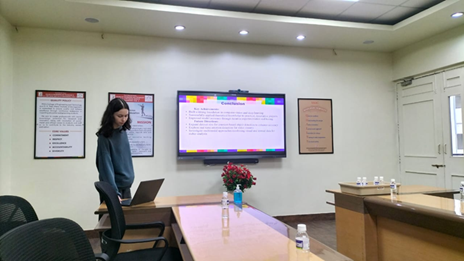
Viktoria Ulianova from Russia presenting the final demo on object detection.
Natural Language Processing
Nguyen Van Hoang Khang contributed to ongoing NLP research projects involving sentiment analysis and LLM development. He explored BERT-based models and multilingual datasets for regional language processing.
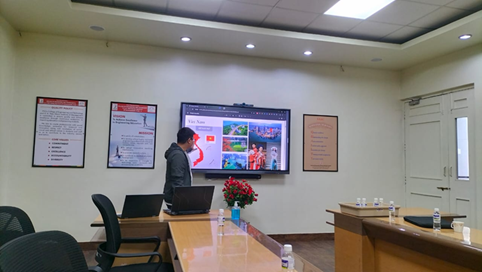
Nguyen Van Hoang Khang from Vietnam collaborating with students and faculty during a lab session.
Entrepreneurship Development
Ismail Trikki from Tunisia worked with the Innovation and Start-up Cell to understand the Indian start-up ecosystem, participate in ideation sessions, and co-design a business model prototype focusing on Vocallia app he has developed recently.
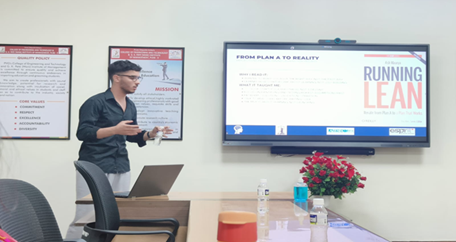
Ismail Trikki from Tunisia sharing insights during the Entrepreneurship Development Workshop.
Learning Outcomes and Cultural Exchange
- Enhanced understanding of cross-cultural working environments
- Skill development in AI and innovation methodologies
- Increased awareness of global problem-solving approaches
- Opportunities for Indian students to collaborate and co-learn with international peers.
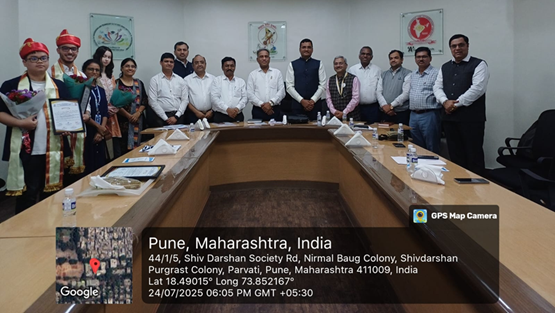
Group photo of international interns with PVG's COET&M faculty and coordinators.
Feedback from Interns

> “The support and mentorship I received at PVG’s COET&M helped me grow professionally and personally. I feel honoured to be a part of this exchange program.”
— Viktoria Ulianova from Russia
> “I learned so much about natural language processing, but what stood out was the warmth and enthusiasm of the students here.”
— Nguyen Van Hoang Khang from Vietnam
> “The entrepreneurship cell was incredibly vibrant. I got a chance to pitch an idea with students and received constructive feedback!”
—Ismail Trikki from Tunisia
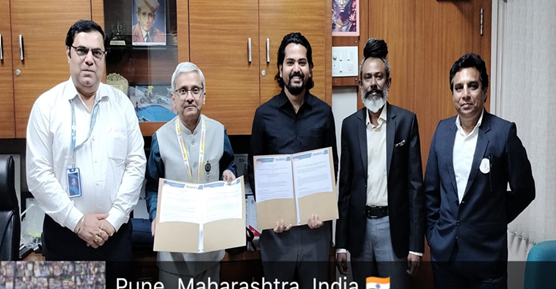
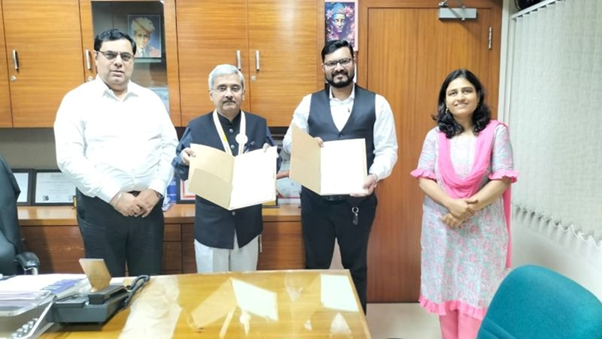
Exclusive MoUs for Research and Innovation
| Company | Objectives | Outcomes |

|
|
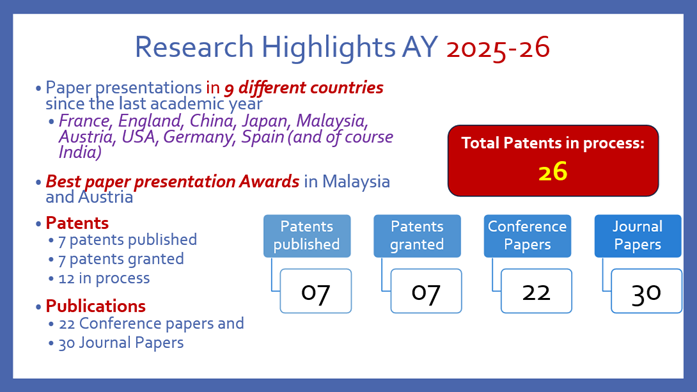
Patents applied – 26
|
 |
|
Patents applied – 03
 |